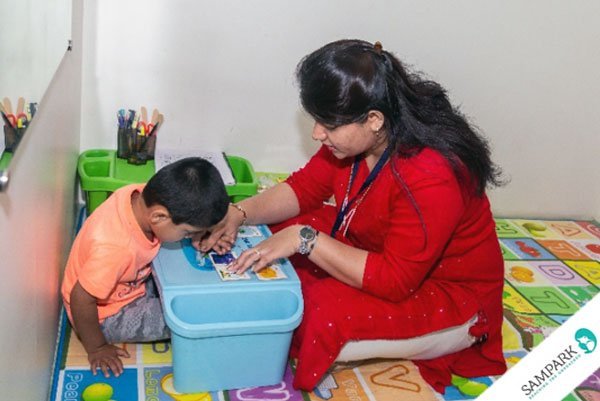
Speech/Language Therapy
• Difficulties pronouncing sounds, or articulation disorders, and stuttering are examples of speech disorders. When a person has trouble understanding others (receptive language), or sharing thoughts, ideas, and feelings completely (expressive language), then he or she has a language disorder.
• Acquired language disorders, however, are caused by brain damage sustained during a stroke, seizure, or other head injury. Aside from brain injury or head trauma, some other known causes of acquired language disorders are: Hearing loss at an early age. Neurological disorders
• If your child has been diagnosed with a language disorder, you’ll need a team of experts that includes a speech-language pathologist, audiologist, and specially trained teachers.
• SLPs can help children with language disorders. They work on language problems found during the evaluation. They work with you, teachers, and other professionals to improve speech and language skills. Good language skills help with learning, behavior, self- esteem, and social skills.

Online Speech Therapy
Therapy at your Home
We need to be able to switch between in-person and teletherapy or distance learning as the situation continues to change. And to do that, we can't just replicate what we've been doing in the clinic with an online platform. We need a new way of doing therapy.
Whether the need for speech therapy arises from an illness, disease or accident, speech-language pathologists can provide most services at home. Many people in recovery have spent weeks or months in hospitals and are thrilled to return home. Others may not have been hospitalized but do not have a means of transportation to outpatient service facilities. Still others are homebound, receiving all care in their residence. It is still possible to receive high quality, evidence-based speech-language, or cognitive-communicative therapy. There are actually benefits to receiving therapy at home.
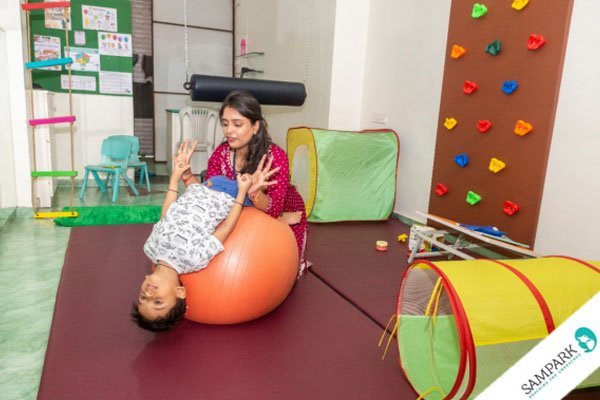
Occupational Therapy
An occupational therapist works with persons who are unable to carry out the various activities that they want, need, or are expected to perform. Therapists are skilled in analyzing daily activities and tasks, and they work to construct therapy programs that enable persons to participate more satisfactorily in daily occupations. Occupational therapy intervention and the organization of specific therapy programs are coordinated with the work of other professional and health care personnel.
Occupational therapists work with individuals of all ages and with various organizations, including companies and governments. The practice of occupational therapy focuses on maintenance of health, prevention of disability, and improvement of participation in occupations after illness, accident, or disability. Thus, therapists typically work with persons who have physical challenges in occupations because of illness, injury, or disability. They also work with persons who are at risk for decreased participation in their occupations. For example, programs for older adults that adapt their living environments to minimize the risk for a fall help them to continue to live in the community. Occupational therapists evaluate children to determine which stimuli they are sensitive to, then work with each child and his or her family to develop coping mechanisms and treatment plans. We use a sensory integration approach which is play-based and focused on providing a safe environment for children to be exposed to various stimuli. Activities include swinging, therapeutic brushing, climbing a ladder, jumping, water play, and navigating an obstacle course with varied surfaces.
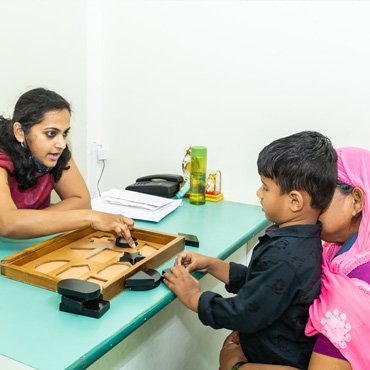
Psycho Educational Therapy
Psychology is the study of mental processes and behavior. Psycho educational testing refers to the psychological tests used to analyze the mental processes underlying your child’s educational performance. As part of the assessment, your child will undergo Psychoeducational testing.
Numerous tests exist. Some are better than others. Because these tests will be used to determine the nature and severity of any underlying disorders, you should try to understand what these tests mean.

Literacy Disorders
Language-based learning disabilities are literacy-related problem with reading, spelling and writing and include dyslexia.
Children with language disorder generally have deficits in core language area such as morphology, syntax and semantics. The difficulty may range from mild to severe and affect oral. receptive and expressive language and written language. Children with language disorder will most always have difficulty with phonological awareness which is vital early reading skills and working memory, a key skill which relates to holding onto newly learnt information just long enough to manipulate it meaningfully.
Children with language disorder have difficulty with most aspects of learning. These children's low language, phonemic awareness and working memory skills impact all aspects of academic learning. Children with this disability are generally poor readers and have poor comprehension skills.
Children with reading disorder (dyslexia) have good oral language skills and adequate comprehension. These children most often have difficulty with phonological awareness and phonological working memory which limits their ability to make the sound-letter link, necessary for accurate decoding and when learning new words.
Children with reading comprehension difficulty often fail to comprehend the complexity of written language due to problems with syntactical awareness and below average vocabularies. These children can read fluently which often masks their reading difficulty.
Much of the information on this page about differential diagnosis of language literacy disorders has been condensed onto a handy chart which can be accessed below.
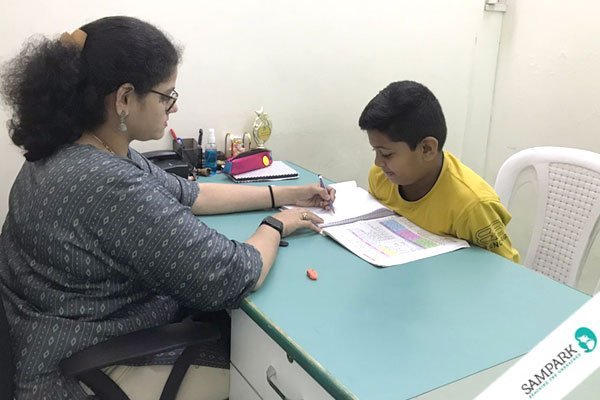
Remedial Therapy
A remedial teaching class is one that is meant to improve a learning skill or rectify a particular problem area in a student. 'Remedy' means a way of solving a problem and ‘Teaching’ means an idea and beliefs that are taught by somebody/something.
Remedial services are intended to bridge the difference between what students already knows and what he should knows. In remedial therapy, the therapist tailors an individualized therapy plan for each child. It help student to develop their potential and remove the obstacles in learning.
RTs work with student individually using evidence-based strategies and interventions to enhance skills in the core academic areas of reading, writing and mathematics.
Individualized intervention may include problem-solving strategies based on a multi-sensory approach.
Who can take remedial Therapy?
• Children with Specific Learning disorder (SLD)
• Attention Deficits Hyperactivity Disorder (ADHD)
• Reading difficulty
• Writing difficulty
• Comprehension Problem
• Memory issues
• Poor Cognitive skills
• Lack of Learning motivation
• Difficult to Understanding new concept
• Took more time to Complete task
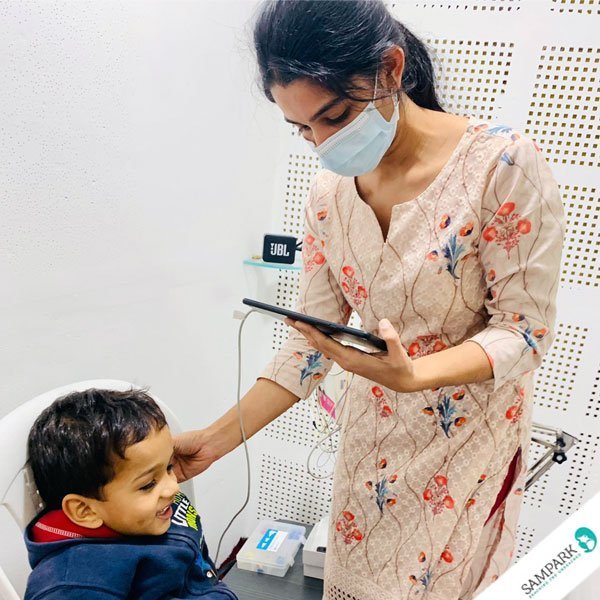
OAE Hearing Test
The OAE test is used to find out how well your inner ear, or cochlea, works. It measures otoacoustic emissions, or OAEs. These are sounds given off by the inner ear when responding to a sound. There are hair cells in the inner ear that respond to sound by vibrating.
Read Clinical Guide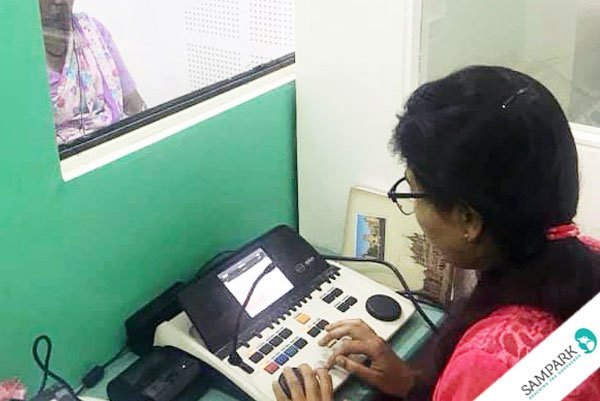
Pure Tone Audiometry
Pure tone audiometry is a test performed by an audiologist to assess ones hearing sensitivity.
To carry out this test we need an audiometer, an instrument to deliver sound stimuli.
Ideally a sound treated room is required to carry out this test.
Patient is made to sit comfortably and being instructed as follows; \"after putting these headphones onto your ears you will be hearing a tone/beep, whenever you hear that, you raise your finger even if it is very soft\".
An audiogram is a representation of one's hearing. It is a graph frequency versus intensity shows hearing sensitivity of an individual.
Assessment is done at different frequency and intensity levels.
An audiogram provides information regarding degree and type of hearing loss.

Immittance Evaluation
IMMITTANCE AUDIOMETRY is an objective technique which evaluates middle ear function by three procedures: static IMMITTANCE , tympanometry, and the measurement of acoustic reflex threshold sensitivity.
IMMITTANCE testing is a part of the testing completed when you see an Audiologist for a hearing evaluation. It evaluates the function of the eardrum, the middle ear including ossicular chain and function of Eustachian tube, and the acoustic reflex.
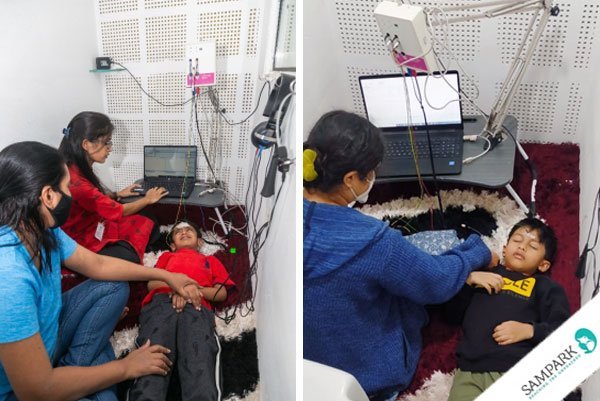
BERA Hearing Test
The brainstem evoked response audiometry (BERA) is an objective neurophysiologic method for the evaluation of the hearing threshold and diagnosing retrocochlear lesions. The aim of the test is to investigate the hearing level in children with suspected hearing loss or pathological speech development.
Read Clinical Guide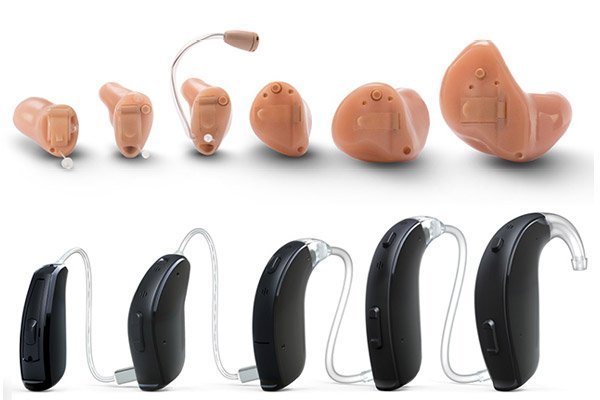
Hearing Aid Device
Hearing aid is recommended and fitted to the patient’s with hearing loss, provided and after confirmation from an ENT surgeon no other treatment is going to help him/her to improve hearing capacity.
Hearing aids can be chosen on the basis on type/degree/ severity of hearing loss.
His/her hearing demand.
Cosmetic value attached to it (Visible/invisible) and The budget of a patient.